Dreaming of a property in the South of France? To ensure you know exactly what to expect on your journey to ownership, we'll guide you step-by-step through the French buying process.
As your search agent, we scour the entire market for you – find out more in our separate article on the search mandate.
1. Clarify your financing or proof of creditworthiness – and do it early!
The better your creditworthiness is documented – even as a cash buyer – the stronger your negotiating position!
If you need a loan, arrange for a bank confirmation in French or English early on – we will gladly send you a template for such a letter from your bank upon request. Important: This proof is already required with the "Offre" (offer), not just at the notary's certification.
Few German banks finance holiday homes abroad – we are happy to put you in touch with a specialized financing advisor.
2. Your Arrival for Viewings – The Tour
Once your shortlist is ready, we organize a joint viewing tour, usually with several local real estate agents. Plan at least one week so that a second viewing – possibly with an expert – is also possible. Typically, 3 - 5 properties can be viewed per day, depending on location and travel times.
Also take time to explore the surroundings of the properties you're interested in: restaurants, supermarkets, etc. Most of our clients find their dream property during the first tour.
3. Ideally: The Desired Property Has Been Found!
We always recommend a second viewing to clarify any open questions. Afterwards, we jointly review all available documents: floor plans, energy performance certificate, building permits. For structural questions, we consult an expert, architect, or interior designer if necessary.
4. Price Negotiation
In most cases, the purchase price offer is initially made verbally, and it is not uncommon for there to be a counter-offer. However, some agencies immediately request the offer in written form.
5. The Written Offer & Reservation – "l'offre d'achat"
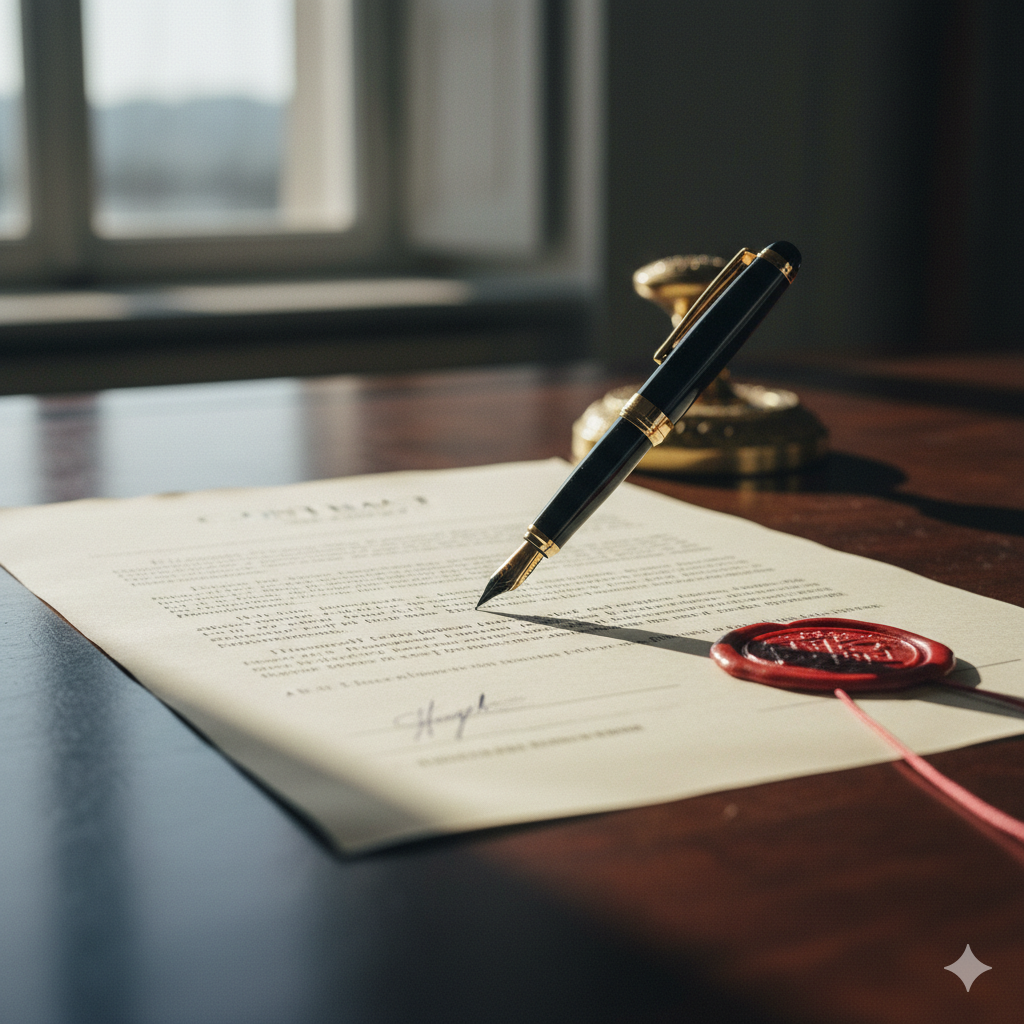
After the verbal agreement, the written purchase offer, "l'offre d'achat", follows. We prepare this multi-page document for you. It includes your details, a precise description of the property, the agreed purchase price, the broker's commission, and any suspensive conditions (e.g., financing approval or a positive building survey) – these protect you as the buyer. You can download a preview of this document from the download area.
The offer is usually valid for a few days to a week and can be signed digitally.
Once the seller signs and returns it, the offer becomes binding: the property is exclusively reserved for you, and further viewings or offers are excluded. The signing of the preliminary contract with the notary usually takes place approximately 3-4 weeks later. The seller is now legally bound – however, as the buyer, you can still withdraw. This one-sided regulation serves to protect the buyer and is typical of French real estate law.
We require the following documents from you for the offer:
IMPORTANT: Submitting the offer does not yet mean that a down payment is due.
6. The Preliminary Contract – "Promesse de Vente" or "Compromis de Vente"
Approximately 1 to 4 weeks after the offer is accepted, the most important appointment follows: the notarized signing of the preliminary contract. The notary plays a neutral, legally mandated role and advises both parties. In France, however, it is not uncommon for buyers and sellers to appoint different notaries. In such cases, the buyer's notary drafts the contract, incurring no additional costs. We are happy to recommend German or English-speaking notaries with whom we regularly collaborate.
The preliminary contract legally stipulates the purchase price, payment terms, property description, seller's assurances, and suspensive conditions. The notary will explain the entire contract content – take your time to ask questions, as the appointment can easily last two hours. Important: Changes are only possible during this initial notarization; they are no longer possible during the final notarization.
Bring identification documents and an EC card, as an advance payment for registration fees is due directly at the appointment. A few days later, you will pay the down payment of 10% of the purchase price (sometimes 5% by arrangement) into the notary's escrow account.
TIP: Apply for international birth and marriage certificates now – you will need them for the final notarization.
7. The Withdrawal Period – "Cooling-off Period"
Immediately after signing the preliminary contract, a statutory 10-day withdrawal period begins. During this time, you can withdraw without stating a reason and without losing your down payment – a right exclusively granted to the buyer. The notary will inform you of the start and end of this period via digital registered mail (AR24). After this period expires, the preliminary contract becomes definitively binding; withdrawal is then only possible under very specific conditions (e.g., rejected financing).
8. Notarial Checks and Waiting Period
A phase of approximately 2-3 months follows, during which the notary carries out all necessary checks and registrations: He checks for any pre-emptive rights of the municipality, arranges for the deletion of encumbrances from the land register, and reviews all documents.
Your financing period runs concurrently: If the bank rejects the loan, you can withdraw from the contract and get your down payment back. It's best to use this waiting period productively – we are happy to help you find local tradespeople, insurance providers, or other service providers, so you can hit the ground running after receiving the keys.
9. Payment of the Purchase Price – Nearing the Finish Line
Once all checks are complete, you will be asked to pay the remaining purchase price, including ancillary costs – to the notary's escrow account, not directly to the seller. Initiate the transfer promptly, as international transfers can take several days and the notary cannot finalize the deed without receiving the funds.
Now, take out the "assurance d'habitation" (home insurance) – it is required for the handover. You can already register for electricity (e.g., EDF) and water (e.g., SUEZ) online. We are happy to assist you with these steps.
10. Inspection and Meter Readings – The Final Check
A joint inspection takes place one day before the final notarization: Is the property in the agreed-upon condition, and are all agreed-upon items present? The meter readings for electricity, water, and possibly gas are recorded. Any remaining questions – for example, about heating or waste collection – can be clarified with the seller here.
11. The Final Notarization – "Acte de Vente" and Key Handover
At this appointment, the final purchase agreement is signed – from this moment on, you are officially the owner. The notary will read out the most important points once more; changes are no longer possible at this stage.
After both parties have signed, the seller will hand over the keys to your new home. The transfer of ownership will be automatically registered in the land registry in the coming weeks. Congratulations – you are now the owner of a property in Southern France!